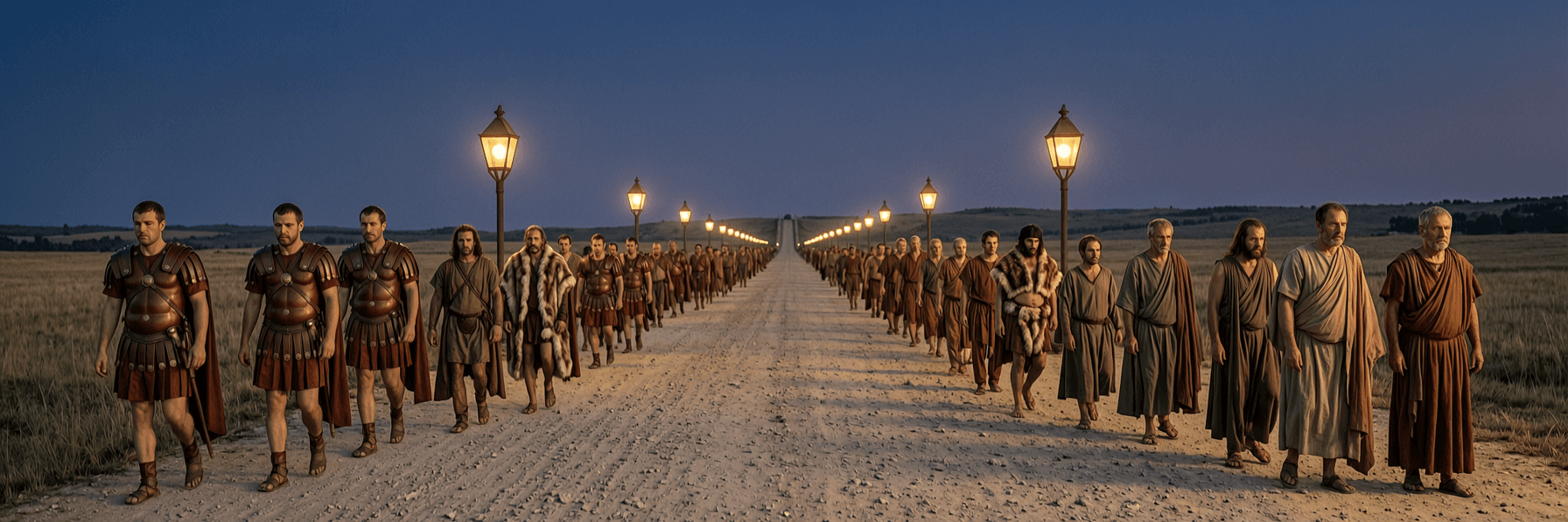
The Antonine Dynasty (96-192 AD) represented the apex of Roman imperial civilization — the period Edward Gibbon called the time "in the history of the world during which the condition of the human race was most happy and prosperous." Five emperors in succession governed with unusual restraint and wisdom, each choosing their successor by adoption rather than birth. Marcus Aurelius was the last of these "Five Good Emperors," and his reign, despite being marked by plague and war, maintained the administrative and philosophical standards of the dynasty.
The Stoic philosophy that Marcus practiced had deep roots in Greek thought — originating with Zeno of Citium around 300 BC, refined by Chrysippus, and transmitted to Rome through figures like Cicero and Seneca. For Marcus, Stoicism was not a school but a discipline: the daily practice of aligning thought with reason and action with virtue. The Meditations represent the most intimate record we have of this practice in action — a working notebook, not a published text, written by a man who took the philosophy more seriously than most of its professors.
121 AD — Marcus Aurelius born in Rome
138 AD — Adopted into the imperial family by Antoninus Pius
161 AD — Becomes Emperor of Rome; shares power with Lucius Verus
167 AD — Antonine Plague begins; Marcomannic Wars erupt on Danube frontier
180 AD — Dies at Vindobona (Vienna) on campaign; Meditations preserved