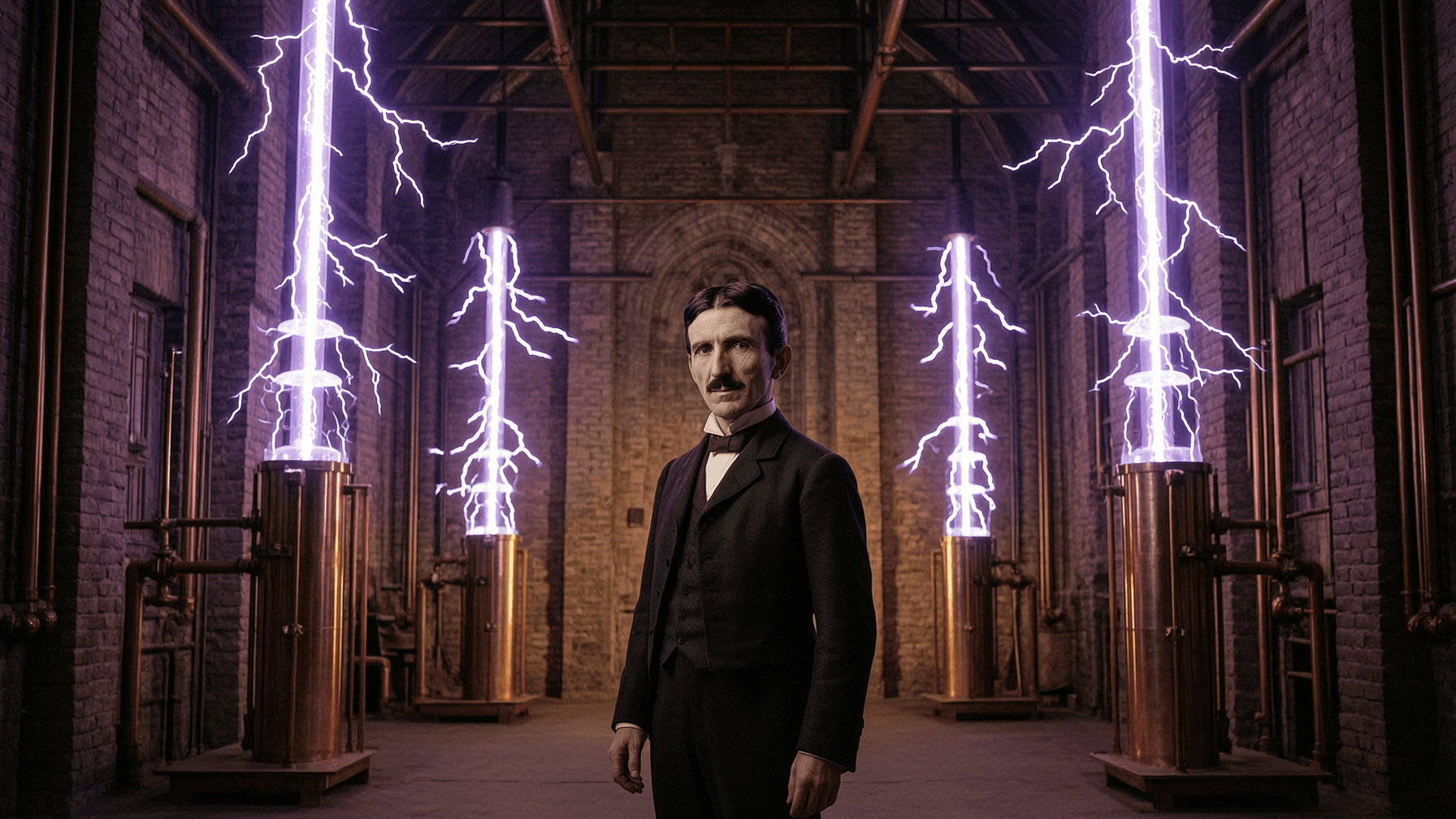
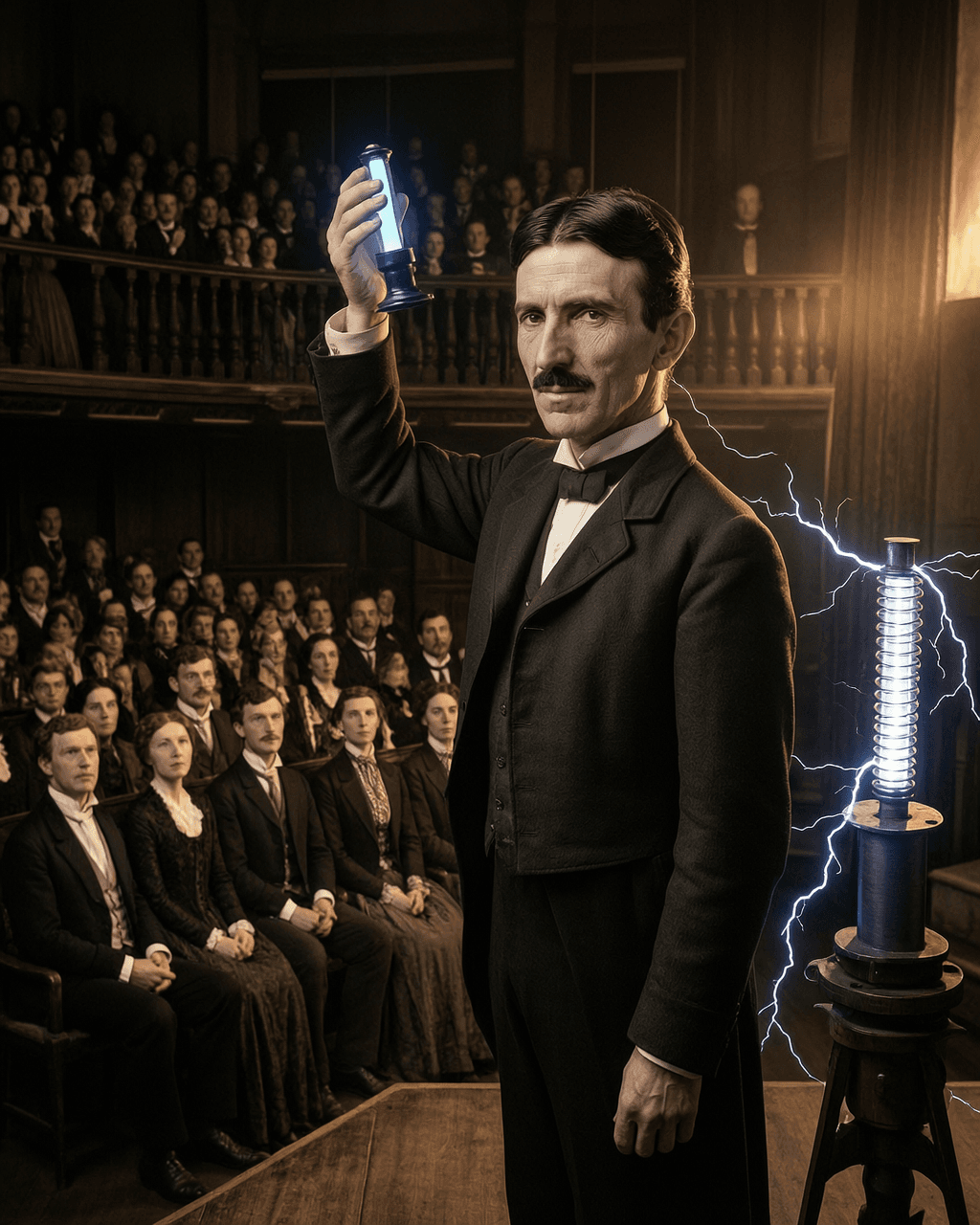
The Gilded Age (roughly 1870-1900) was the period in which the infrastructure of modern industrial civilization was constructed — railways, steel, telegraph, and electrical power. It was an era of extraordinary invention and extraordinary exploitation: Edison, Westinghouse, Carnegie, Morgan, and Rockefeller built the systems that powered the twentieth century, and they built them in a specific way — centralized, privately owned, designed for extraction of profit rather than distribution of benefit. Tesla's Wardenclyffe dream was incompatible with this model, which is precisely why it was defunded. The War of Currents was not a technical dispute. It was a business dispute about who would own the future.
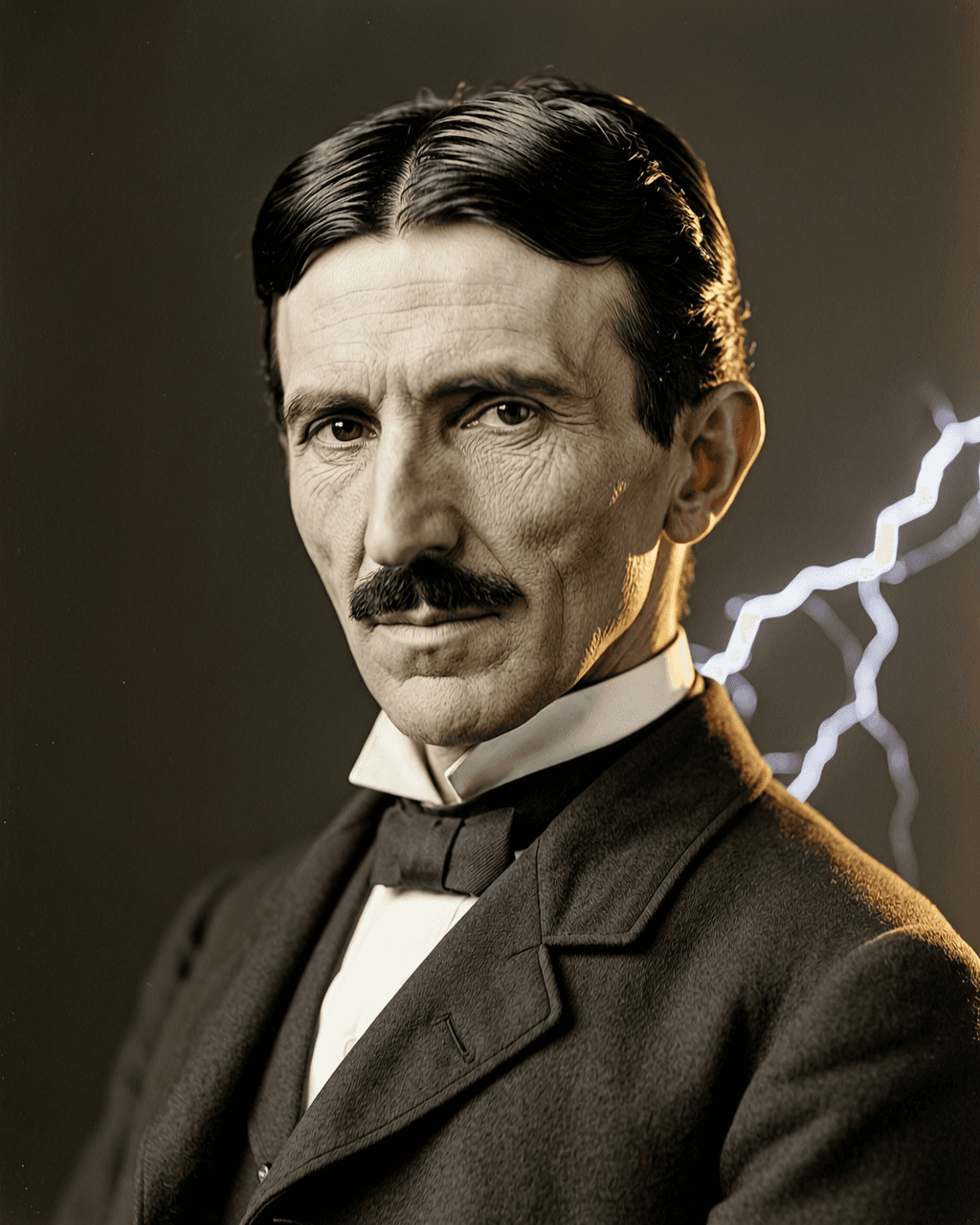
Tesla's work sits at the intersection of two traditions in American invention: the systematic, patent-maximizing approach of Edison's Menlo Park laboratory — the first industrial research laboratory — and the lone, visionary approach of the independent inventor. Tesla began as the latter and never fully became the former. He filed over 300 patents across his lifetime, but his most important work generated wealth for other people rather than for himself. The question of why brilliant inventors consistently fail to capture the economic value of their inventions is still current. Tesla is its most precise and painful case study.
1856 — Born in Smiljan, Austrian Empire (now Croatia), during a lightning storm at midnight
1884 — Arrives in New York; works for Edison; breaks from Edison that same year
1888 — Files AC polyphase motor patents; Westinghouse licenses them; War of Currents begins
1893 — Chicago World's Fair lit by AC; Niagara Falls AC plant completed 1895
1943 — Dies in Room 3327, Hotel New Yorker; FBI seizes papers; patents already public